
Alginate Structure
Alginate is an anionic natural polymer that is composed of glucuronic acids (linear block copolymers). The glucuronic acids that make up alginate are β-D-mannuronic acid (M) and α-L-guluronic acid (G)6.

The M acids are able to form β-1,4-linkages, these links give the M blocks a flexible and linear confirmation. Whilst the G acids form α-1,4-linkages, these links provides the polymer with a folded and rigid structure (due to steric hindrance of the carbonyl group).
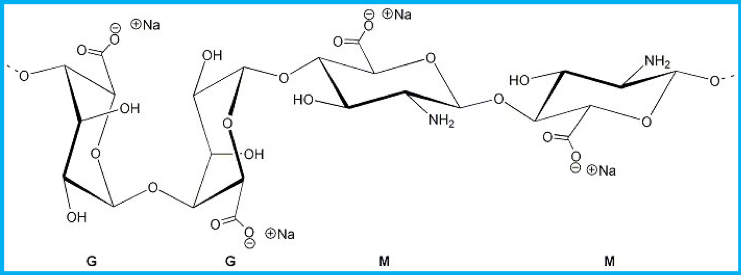
Figure 3 Formation of M-blocks, G-blocks and MG-blocks. This image was obtained from Wikimedia commons
Alginate gels are 3D cross-linked networks, there are many methods in order to achieve this cross linking such as thermal gelation, cell cross-linking, covalent cross-linking and ionic covalent. I’ll be focusing on the ionic cross-linking as it is the most common method to prepare these alginate gels, it involves combining an alginate solution with divalent cations such as Ca2+. The divalent cations will bind to the G-blocks which allows them to form a junction with other G-blocks from adjacent chains, this forms the gel structure6. There are however disadvantages in this method, the most critical disadvantage is that there is a limited long-term stability in some physiological conditions, as the gel will dissolve when the divalent cations are released into the surrounding media due to the exchange reactions with monovalent cations6.
 Hydrogels from Natural Polymers for Biomedical Applications